in today's world of globalization and digitization, choosing the right server is crucial to the operation of corporate and personal websites. hong kong servers and korean servers are two popular choices in the asia-pacific region, each with unique advantages and performance characteristics. this article will conduct an in-depth comparison of these two servers from multiple dimensions to help users make informed decisions when choosing.
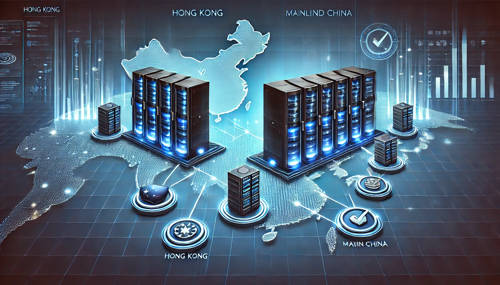
the geographical location of the server directly affects the delay of data transmission. the hong kong server is located in the center of the asia-pacific region, has superior network connections, and is suitable for serving users in mainland china and southeast asia. in contrast, korean servers have advantages within the east asia region, especially for local korean users, with extremely excellent latency performance. therefore, if your target users are mainly concentrated in a specific area, choosing a server in the corresponding geographical location will significantly improve access speeds.
network bandwidth is an important factor affecting server performance. hong kong servers usually offer higher bandwidth options and are suitable for applications that require large amounts of data transfer, such as video streaming or large-scale online games. korean servers have excellent performance in terms of stability, especially during peak hours, and can effectively cope with traffic fluctuations to ensure that the user experience is not affected. based on different business needs, users can choose the server type that best meets their needs.

security is a factor that cannot be ignored when choosing a server. hong kong servers have relatively strict laws and regulations on data protection and privacy, making them suitable for companies that handle sensitive data. korean servers are usually equipped with advanced firewalls and ddos attack protection measures, which can effectively resist network attacks and ensure the safe and stable operation of the website. users should evaluate their own data security needs when choosing.
although price is not the only criterion for choosing a server, it is still an important consideration. hong kong servers are generally more expensive, but the high bandwidth and stability they provide make them great value for money in terms of performance. relatively speaking, korean servers may have a slightly lower initial investment, but after long-term use, users may find that their advantages in stability and security are worth the additional investment. all things considered, users should choose based on budget and actual needs.
the technical support and service quality of the server directly affect the user experience. hong kong server service providers often provide 24/7 online support and can quickly respond to user issues. korean servers are outstanding in local support and can provide more considerate technical services, especially the convenience of language communication. therefore, users should pay attention to the service quality and response speed of the service provider when choosing to ensure that problems can be solved in a timely manner.
different servers are suitable for different scenarios. for websites that require fast response speed and high bandwidth, hong kong servers are undoubtedly a superior choice, especially for enterprises facing the international market. for websites mainly targeting local korean users, korean servers can provide lower latency and better stability. users should clearly understand their target audience and business needs when choosing a server, so as to make a more reasonable choice.
in the performance comparison between hong kong servers and korean servers, both have their own advantages and disadvantages, and users need to make comprehensive considerations based on their own needs. for companies facing the international market, hong kong servers may provide greater advantages; while for companies focusing on the korean market, korean servers are a better choice. when making the final decision, it is recommended that users not only pay attention to price and performance, but also consider factors such as the service provider's technical support, network stability, and security to ensure that they choose the server that best suits them.
- Latest articles
- Common Troubleshooting Steps And Rapid Recovery Solutions For Taiwan Telecom CN2 Broadband
- An Automated Operations And Maintenance Solution Covering Everything From Development To Monitoring How To Build A Site On Hong Kong Cloud Servers
- From A Business Perspective, Is Vietnam's VPS Reliable? Considerations Regarding Compliance And Data Security
- Free Server Korea Security Protection Policy And Backup Implementation Guide
- Cost And Operation Management Recommendations For Enterprises Deploying Korean CN2 Site Cluster Cloud Servers
- Basic Information On Taiwan Proxy Servers, Common Terminology Explanations, And Purchase Precautions
- How To Choose A Cloud Server In Thailand: From Network Latency To After-sales Service, Comprehensive Aspects
- Recommended Recommendations For Operators To Improve Thailand's High-Defense VPS Protection And Bandwidth Stability By Comparison
- Optimized Storage Costs For Hong Kong Hosted Servers, Hard Disk Servers, Layered Storage, And Cold Archiving Solutions
- Are Tencent Cloud Korean Servers Native? Recommendations For Local Service Provider Integration And Latency Optimization
- Popular tags
-

The Best Way And Practical Suggestions To Obtain Korean Native Ip
this article introduces the best ways and practical suggestions to obtain korean native ip to help users achieve a better access experience on the internet. -
Cultural Differences: Common Etiquette And Communication Techniques Chinese People Use Korean Servers
Practical Guide for Chinese Players: Explains cultural differences, common etiquette, and communication skills when playing on Korean servers, covering practical suggestions such as nicknames, chat, voice control, teamwork, and conflict resolution. -

Practical Suggestions For Game Manufacturers Using Korean Cloud Server Latency Optimization Methods
a practical guide for game manufacturers, introducing korean cloud server latency sources and optimization methods, including network transmission, instance configuration, application architecture and monitoring testing, and giving executable practical suggestions.